
How to Choose the Perfect Italian Salami for Pizza
Salami is a beloved cured meat that adds flavor, texture, and authenticity to a variety of dishes, especially pizza. Salami is a staple in Italian cuisine and has gained worldwide popularity. Here are some tips how to choose the perfect Italian salami for Pizza.
What is Italian Salami
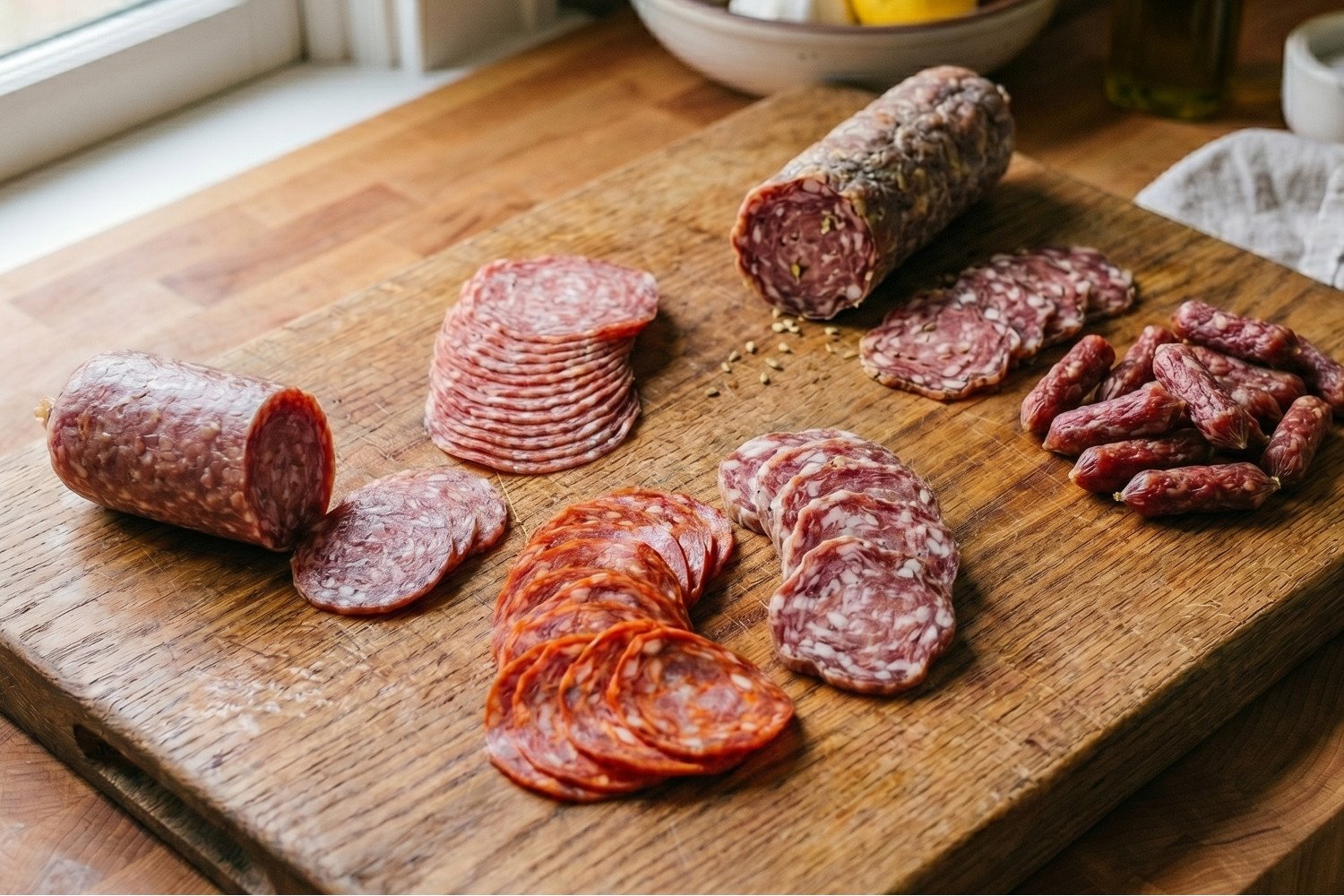
Italian salami is a traditional dry sausage made from fermented and air-dried meat, most often pork, beef, or a combination of the two. While versions exist across Europe, authentic Italian salami is characterized by a mixture of finely or coarsely ground meat mixed with fat, salt, and regional seasonings such as garlic or wine. This mixture is allowed to ferment and dry for weeks or even months. The result is a cured meat with a deep flavor and firm texture.
Popular Types of Italian Salami
Italian salami comes in many varieties, each with unique flavors and regional characteristics. Some of the most popular types include:
Salame Milano (Milano Salami)
- A classic Italian salami made from finely minced pork, seasoned with garlic, salt, pepper, and sometimes wine
- It has a smooth texture and a mild, slightly sweet flavor
- It slices like silk and works beautifully on pizza when you want flavor without overpowering other ingredients
Salame Napoli (Napoli Salami)
- Originating from Naples, this salami is coarsely chopped and typically spiced with black pepper, garlic, and chili flakes, giving it a robust and spicy flavor
- A great middle ground between mild and spicy
- Perfect for pizzas that need a bit more personality without going full fire mode
Salame Toscano (Tuscan Salami)
- A traditional cured salami from Tuscany, made from coarsely chopped pork with simple seasoning like salt, pepper, and sometimes red wine, offering a rich, savory taste
Salame Felino (Felino Salami)
- Hailing from the Parma region, this salami is made from pork with a delicate flavor profile, seasoned with salt, pepper, and garlic
- Often considered premium, it’s elegant without being boring
- Ideal for gourmet-style pizzas
Soppressata
- A coarsely ground salami that can be either spicy or mild, made with pork and seasoned with black pepper, chili, or other spices
- It is typically dry-cured and has a rustic texture
- It’s hearty and works great when you want your pizza to feel substantial
Finocchiona
- A Tuscan salami flavored with fennel seeds, giving it a distinctive anise-like aroma
- Made from pork, it has a sweet and aromatic flavor
- It’s fragrant and unique, pairing beautifully with creamy cheeses and vegetables
Salame Piccante (Piccante Salami)
- If you like heat, this one delivers
- Spicy, closer to pepperoni but more nuanced
Cacciatore
- A rustic Italian salami, often made from coarsely chopped pork and seasoned with garlic, pepper, and red wine.
- It is traditionally used in cooking or sliced as part of antipasti
How is salami different from pepperoni?
Pepperoni closely resembles salami, but there are a few differences between the products. is slightly different. Unlike its American cousin pepperoni, Italian salami is usually coarser in texture and salami is less spicy, but more complex. Salami is often flavored with garlic, black pepper, fennel, or wine
Which Salami for Your Pizza?
So there are plenty of options, and I highly recommend trying as many different ones as possible. They all have their own great characteristics. However, if you need a quick guide on where to start, here’s a quick summary. If you want something mild and classic, try Milano or Felino. Napoli is balanced and flavorful, while Finocchiona is great pair with creamy cheese. Piccante has a savory kick, while Soppressata is full-bodied and wonderfully rustic. So, the choice is yours. But why choose just one? Send your taste buds on an adventure and use a couple of different salamis on your pizza.
Why Salami Works Well on Pizza
Adding salami to your pizza is a great way to enhance its flavor profile. Salami isn’t just a topping, it blends into the pizza. Salamis’s fat content melts slightly, adding juiciness and making everything taste deeper and richer. The aging process gives salami its signature tangy flavor, chewy texture, and vibrant color, making it the perfect pizza topping.
How to Use Italian Salami on Pizza
Slice it Thin
- Slice the salami into thin rounds or small pieces
- Thinner slices will crisp up nicely in the oven, adding a delightful texture
- Too thick, and it becomes chewy in a heavy way
Place on Top
- Add salami slices on top of the assembled pizza before baking
- Distributing evenly ensures each bite has a balanced flavor
- If you want something special, put some salami under the cheese for extra flavor.
Don’t Overload
- Salami is salty and rich, so a small amount is enough
- Overloading can make the pizza heavy
Garnish with Herbs
- After baking, garnish with fresh herbs like oregano, basil or arugula for added freshness
Flavor Pairings
Combine salami with classic ingredients like mozzarella, tomato sauce, and basil. Salami pairs exceptionally well with vegetables like red onions, black olives, sliced mushrooms, and sweet or hot peppers and garlic. If you want something a little more gourmet, combine salami with goat cheese and arugula.
Great Cheese Pairings
- Mozzarella (classic combo)
- Provolone (adds sharpness)
- Parmesan (for a salty kick)
- Goat cheese (gourmet style)
Perfect Veggies
- Caramelized onions
- Olives
- Sliced mushrooms
- Arugula (add after baking)
How to Choose the Perfect Italian Salami for Pizza
Choosing the best Italian salami for your pizza involves considering flavor, texture, and authenticity. Here are some tips to help you select the perfect salami.
Determine the Flavor Profile
- Do you want hot and spicy, or classic and mild
Check the Ingredients
- Authentic Italian salami typically contains pork, salt, pepper, and natural casings
- Avoid those with artificial preservatives or fillers
Consider the Texture
- Look for firm, slightly chewy slices that hold their shape when cooked
Authenticity and Origin
- Certifications like PDO (Protected Designation of Origin) ensure quality