How to Solve 12 Common Pizza Sauce Problems
A great pizza sauce is both sweet and savory, and not too watery. Here are some common pizza sauce problems and how to easily fix them.
How to Solve Common Pizza Sauce Problems
1. It’s Watery
- Watery sauce can cause the base to become soggy
- To avoid this, it’s best to use whole canned tomatoes (not pre-crushed ones)
- You can strain the tomatoes before crushing them
- If the sauce gets too watery, you can simmer it over low heat to evaporate the liquid
2. It Tastes Sour
- If the tomatoes are slightly raw or of low-quality, they can create a sharp, sour taste
- Stir in a pinch of sugar or a dollop of whipped cream
- Or you can add a whole carrot to sweeten the sauce naturally
- More Tips: How to Balance Acidity in Tomato Sauce
3. It’s Too Sweet
- Add sugar very lightly
- If an accident occurs, you can balance the sweetness by adding a splash of red wine vinegar, lemon juice, or a pinch of chili powder for extra heat
4. It Tastes Bland
- Taste and adjust the sauce to your taste while simmering
- Season with herbs such as basil, oregano and thyme
- You can also add tomato puree, garlic or grated Parmesan cheese
5. Check Salt Balance
- A sauce that is unsalted will taste bland, even with delicious tomatoes
- Add salt gradually and taste both hot and cold, if possible
6. It Looks Dull
- Blending the sauce too vigorously can affect its appearance
- Instead of a blender, crush the tomatoes by hand
- If the sauce lost its delicious red color, a tablespoon of high-quality tomato paste can also help restore it
7. It’s a Bit Chunky
- Large pieces of tomato can prevent the dough from spreading evenly
- You can use a blender or a strainer to get a smooth sauce, especially if you want a silky texture
8. It’s Too Smooth
- An ultra-smooth sauce can feel a bit lifeless, almost like ketchup
- Try crushing the tomatoes by hand and using only the pulse function in the blender
- If it feels too smooth, try adding a small amount of tomato puree to thicken the sauce and add richness
- I like the pizza sauce to be thick like hot lava, not thin like tomato soup
9. It’s Overcooked
- Pizza sauce is not pasta sauce
- It doesn’t need to be simmered for as long
- Usually, a short simmer is enough
- Classic Neapolitan-style sauce is often barely cooked at all
10. It’s Too Cold
- Let the sauce sit at room temperature for 15–20 minutes before making the pizza
- Cold sauce can slow down the pizza’s cooking, or the pizza may cook unevenly
11. It’s Too Hot
- The sauce shouldn’t be too hot either
- A steaming hot sauce can start to cook the dough prematurely
- Let the sauce cool before spreading it on the pizza base
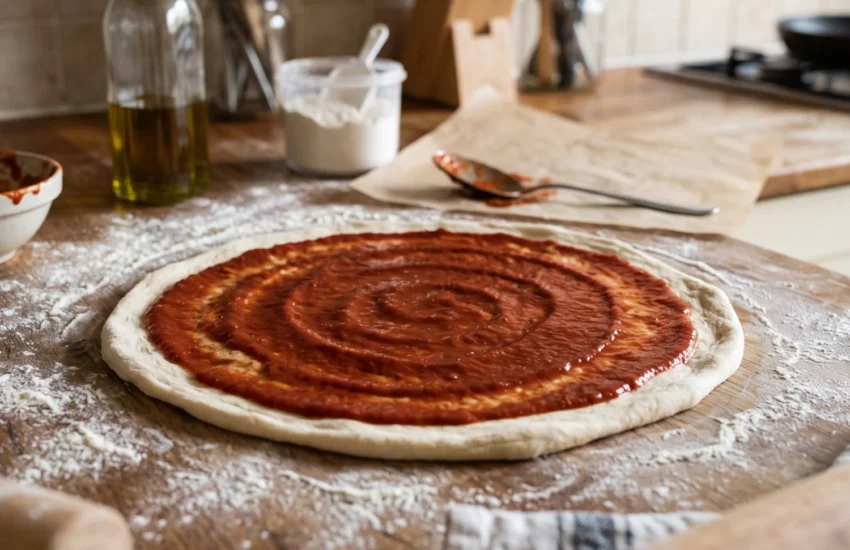
12. Too Much Sauce
- More sauce does not mean better flavor and can make the crust watery
- Spread only a thin layer of sauce on a pizza