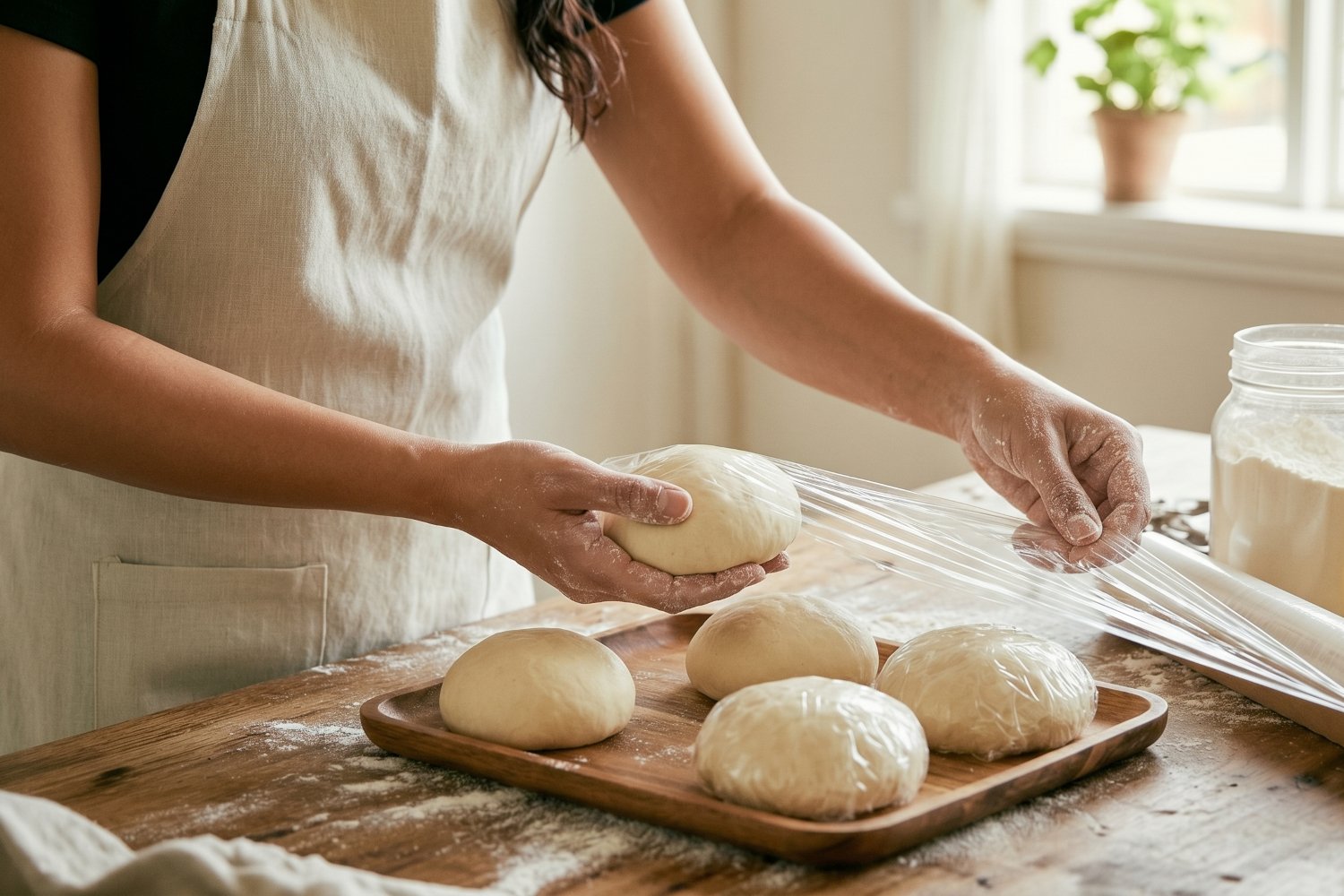
How to Freeze Pizza Dough
Freezing pizza dough is a great solution to make your busy life easier. You can prepare it in advance and have it ready for future use. Here are some tips how to freeze pizza dough.
Can You Freeze Pizza Dough?
Yes, you can absolutely freeze pizza dough. It’s one of the simplest ways to make homemade pizza feel effortless. Most yeast doughs freeze exceptionally well, and with the right technique, you won’t notice the difference in quality of flavor. However, don’t store it in the freezer for too long. The quality will start to deteriorate after a few months, as ice crystals can eventually damage the yeast.
Why Freeze Pizza Dough?
1. Convenience
What a delicious idea to store ready-made pizza dough balls in the freezer. The ready-made dough can be thawed if needed, which saves preparation time when you feel like making homemade pizza.
2. Make It in Advance
You can make the pizza dough in advance. If you’re planning on making pizza on a weeknight but don’t have time to prepare the dough, frozen pizza dough balls are a great solution. Or if you need to make multiple pizzas for a party, you can make the dough in advance.
3. Make a Larger Batch at Once
Be prepared and make a larger batch at once. This way you will have ready-made pizza dough balls in the freezer for coming weeks. Pizza dough can be frozen for up to 3 months, but it is best to use it within a month, or a month and a half.
4. Easier to Shape
Interestingly, and perhaps a little surprising, frozen and thawed dough is often easier to shape than a fresh dough. This is because the dead yeast cells release glutathione, which softens the dough.
5. Flavor Development
Freezing can help develop better flavor because the dough slowly rises during freezing and thawing.
6. No Waste
Never let leftover pizza dough go to waste. Freezing preserves the dough, prevents spoilage, and allows it to last for weeks. So, if you have leftover pizza dough, put it in the freezer.
7. Perfect Backup Plan
Homemade frozen pizza dough is the best backup plan for unexpected pizza cravings that can strike at any time. As long as you give the frozen dough time to thaw.
When to Freeze It?
The best time to freeze pizza dough is after it has risen the first time. At this point, the yeast has done enough work to develop the flavor, but the dough has not yet fully stretched. Before freezing, you can let the dough rise a second time after dividing it into balls. Just about 20-30 minutes, not longer. This gives the dough a good rise time, so it will rebound nicely later. But don’t let the dough rise too much for the second time. Over-raised dough will become weak and sticky after thawing.
How to Freeze Pizza Dough
1. Prepare the Dough
Prepare the pizza dough according to the instructions. After mixing and kneading, let the dough rise for the first time until it has approximately doubled in size.
2. Divide and Shape
Frozen pizza dough is easier to use in the future if you divide it into portions before freezing. Divide the pizza dough and roll into balls. A suitable portion size is one that can be used to make one pizza, which is about 250 g.
3. Wrap Airtight
Freeze the pizza dough as airtight as possible to prevent the dough from drying out. You can freeze the pizza balls in small freezer containers or in an airtight freezer bags. If you use freezer bags, remove as much air as possible before closing. If you put several in the same container, the problem is that they may stick to each other. The best way is to wrap each ball individually tightly in plastic wrap before placing them in the container. You can brush the pizza balls with a thin layer of olive oil before wrapping, which will prevent the surface of the dough from drying out.
4. Mark the Date
A good tip is to mark the date and type of dough. This will help you remember when you froze the dough. Pizza dough will keep in the freezer for up to several months, but it is best to use it within a month.
How to Thaw Frozen Pizza Dough
Thawing pizza dough properly helps ensure it bakes evenly and maintains its texture. Here are a few methods you can use depending on your schedule, or how hungry you are.
Refrigerator Thawing (Slow and Safe Method)
- Move the dough from freezer to fridge and let it thaw overnight
- Allow it to thaw for 8-12 hours or overnight
- Then bring it to room temperature for 1 to 2 hours before stretching
- This method keeps the dough at a safe temperature and results in even thawing
Room Temperature Thawing (Speedier)
- Remove the dough from the freezer and keep it in its packaging or in a covered bowl
- Let it sit at room temperature for about 1-2 hours until soft and pliable
- Avoid leaving it out for more than 2 hours to prevent bacterial growth
Quick Thawing in Warm Water (Fastest)
- Keep the dough in a sealed plastic bag to prevent water from getting in.
- Submerge the bag in lukewarm water for about 30-45 minutes
- Change the water if it gets cold to help keep it warm
- Use immediately after thawing
Common Mistakes and How to Avoid Them
Mistake: Leaving the dough exposed to air can cause freezer burn and dry it out
Solution: Wrap the dough tightly in plastic wrap or place it in an airtight freezer bag
Mistake: Freezing large chunks can make it difficult to thaw only what you need
Solution: Divide the dough into individual portions before freezing
Mistake: Forgetting how long the dough has been in the freezer
Solution: Label the package with the date of freezing and use within 1-3 months for best quality
Mistake: Freezing immediately after the first rise can hinder the dough’s texture
Solution: Let the dough complete its first rise, then punch it down before freezing to maintain texture
Mistake: Excess moisture can lead to soggy crust
Solution: Ensure the dough is well-kneaded and properly wrapped to prevent moisture loss or excess condensation
Mistake: Thawing dough quickly in a microwave or at room temperature can affect its rise
Solution: Thaw the dough slowly in the refrigerator overnight for best results
Mistake: Skipping room temperature rest can make shaping frustrating
Solution: Allow it to come to room temperature before shaping